
The summer season at Populonia Castle has begun in one of its liveliest ways, featuring the fine wines of Maritime Etruria. The strip of Etruscan coast on which the precious fortress is nestled has been home to grapevines for millennia, a practice that predates the Etruscans and Greek colonization, as confirmed by archaeological finds such as grape seeds.
The art of winemaking in Etruscan times was explored by Carolina Megale, director of the Etruscan Museum of Populonia, Gasparri Collection. Over the recent weekend, she presented a delightful book, "The Etruscans' Passion for Wine," an archaeology of wine along the Livorno coast and beyond, published by Effegi. The project is a pleasure to read thanks to the beautiful photographs and the flowing text. I would describe it as a very in-depth guide, available in two languages, designed to quench the thirst for culture of the Italian people and the many tourists visiting our coast, eager to discover its stories and curiosities.
The book, a true guide to the history of wine in Etruria, begins with the dawn of winemaking, but the focus is clearly on Etruria, and in particular the Etruscan Maritime Coast. Great wine producers, the Etruscans' identity is described, reconstructed through archaeological finds: wine consumption, initially the preserve of aristocrats, was present in religious rituals, and later became famous at the symposiums of nobles and wealthy merchants.
At the opening evening of the 2026 cultural summer, the author spoke of the emancipation of Etruscan women, protagonists alongside men at convivial gatherings; not just servants, prostitutes, or spinners, but true beneficiaries of the blessed libation. The Etruscan people were known for their elegant clothing, so much so that they were called "dress Etruscan," and the Romans (ignorant of viticulture and oenology) were not above saying, "Look how lascivious the Etruscan women are."
During the Populonia event, we personally admired chalices (kalix or calix from the Greek petruzza or cup) and kraters, artifacts also present in the Populonia collection, made of bucchero, the famous black fired pottery typical of the Etruscan people. The description of how wine was made in Etruscan times was intriguing. In addition to spices and honey, Pliny the Elder also added a pinch of flour, and goat's cheese. The Populonia museum itself houses an ancient bronze grater that the director had us examine: this explains the numerous strainers found near the kraters. The success of Etruscan wine, reinforced by trade with the Phoenicians, Greeks, and Romans, allowed the culture of wine to spread; wine was transported by sea in amphorae that, once decanted, were destroyed, enriching the seabed of the Tuscan archipelago and many of our villas. The Etruscans' Passion for Wine is a remarkably readable book that culminates with the figure of the god of wine, Fufluns, whose twin relative is Tinia, a god now preserved in the Malibu Museum. The figures are nearly identical; both show a severed arm, which was undoubtedly held up to a chalice. Thus, men and women wine lovers gravitate toward this beautiful book, a collector's item, definitely worth purchasing if you want to gain a basic understanding of the heritage of our coastal region and, above all, explore an alternative tourist itinerary.


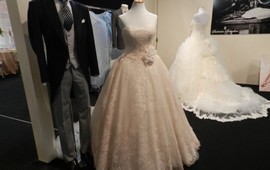






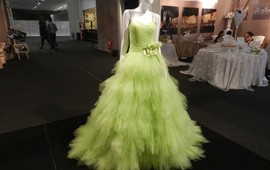
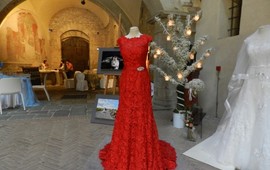
Sartoria della Musica. Complimenti per il portale... molto elegante!
 Sartoria della Musica
Ciao a tutte ed a tutti...mi chiamo emanuele e volevo farvi i complimenti per il vostro sito
-Un successone la sposa in rosso Ferrari, evento firmato wedding italia: Stefania Crociani di Sartoria Borgo Maestro
- Online publication Registration Court of Siena n ° 1 of 28/01/2010 Publisher and Managing Director Valentina Niccolai.

© 2011-2026. www.territorioinforma.com P.I.: 01279650525. hosting & design by WebDesignProduction - All rights reserved. | Italiano | English | top


